









FHN hava şəraiti ilə əlaqədar yenidən əhaliyə müraciət edib
27 Fevral 2025, 10:40
Qaynar xətt:
(+99450) 247 90 86
CƏMİYYƏT
3506
26.04.2020, 21:43

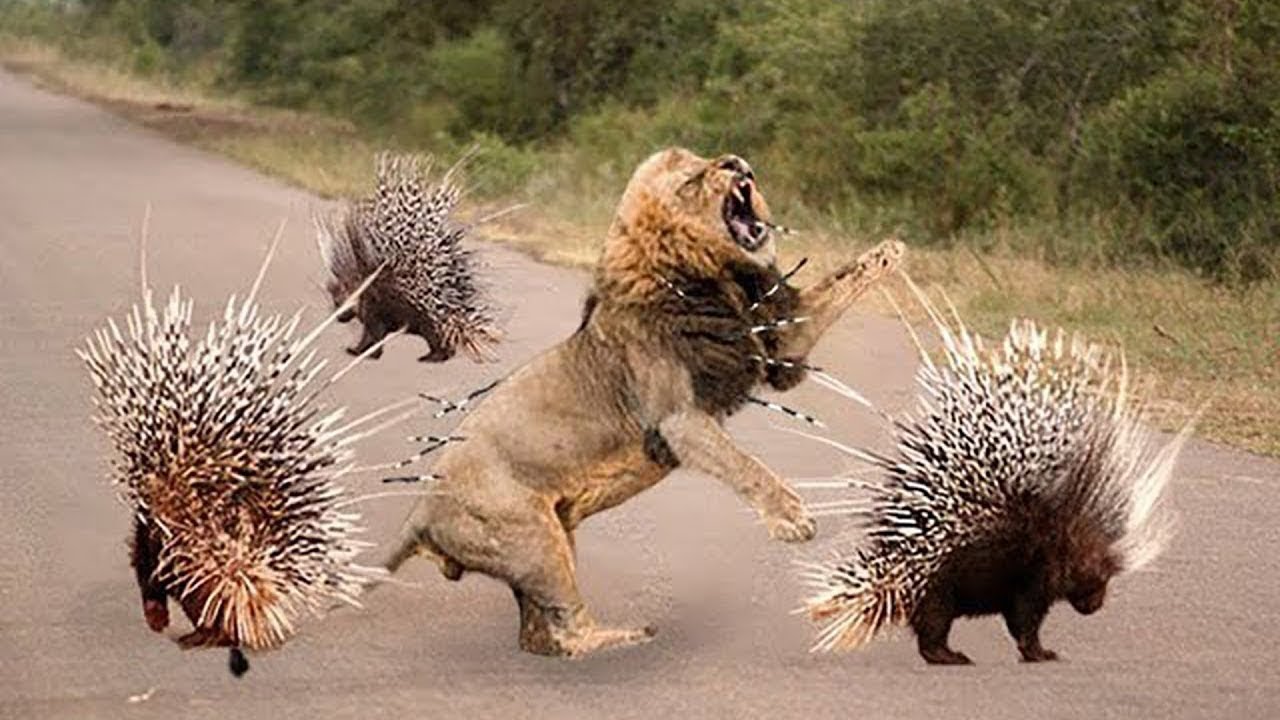
When times are tough, lions will eat porcupines. Researchers find it’s not a case of good quill hunting. Tanya Loos reports.
Lions preying on porcupines often come off second best, sometimes lethally so, researchers have discovered.
African crested porcupines (Hystrix cristata) are about the size of a cocker spaniel, and armed with an impressive set of long, barbed quills, up to 30 centimetres long. When a lion (Panthera leo) attacks, they can become lodged in the predator’s nose, face, or paws, and cause debilitating infection and pain.
“It's David and Goliath on the African savanna,” says Gastone Celesia, from Loyola University, Chicago, US, one of the researchers.
“The powerful king of the savanna tries to eat a juicy, fat porcupine, but he gets hurt by the quills. Even though lions are at the top of the food chain, they get injured if they don't watch what they're doing."
A lion’s ability to hunt their usual prey may be compromised by porcupine-related injuries, forcing them to switch to livestock or even humans.
Celesia and colleagues examined scientific literature from between 1960 and 2016 and found that no systematic study of lion-porcupine encounters had been undertaken. They bolstered the meagre journal records with newspaper reports and items the internet, searching for cases of lions with embedded quills.
They found evidence of 50 which had been injured or killed by their prickly prey.
“By examining records of lions that have been injured by porcupines, we were able to develop a better picture of the conditions that lead lions to try to hunt porcupines and what happens to the lions who get stuck,” says Julian Kerbis Peterhans, from Roosevelt University, Chicago and lead author of the resulting study, published in the Journal of East African Natural History.
Lions were more likely to be wounded by porcupines during severe drought, and in arid ecosystems, suggesting that they turn to hunting them when other prey species are lacking.
“We know from 40-plus years of continuous behavioural research on lions since the 1960s that lions prefer large hooved animals as prey, including antelope, zebra, and buffalo,” says co-author Thomas Gnoske.
“And our data suggest that by the time the lions are relegated to eating porcupines, there's already a problem with the local food supply. Historic records tell us that when environmental conditions deteriorate, particularly in areas where lions and their preferred prey are already living on the edge, they find themselves in serious trouble with nearby humans or their livestock."
The majority of injured lions were male.
“There was a tendency for males to be more often wounded or killed by porcupines – sort of a 'young foolish male’ syndrome,” says Peterhans.
Only two female lions were recorded with quill injuries, and that was during a severe drought in Kenya.
The researchers speculate that female pride members and male cohorts assist one another in removing embedded quills; lone young males are thus more vulnerable to quill injury.
“One moral of the story is that there no free lunch,” adds Celesia. “Even the king of beasts doesn't eat what he wants without paying a price.”


23:16 / 26 Oktyabr 2026
 CƏMİYYƏT
1

23:08 / 26 Oktyabr 2026
SİYASƏT
24

22:58 / 26 Oktyabr 2026
CƏMİYYƏT
49

22:56 / 26 Oktyabr 2026
CƏMİYYƏT
51

22:51 / 26 Oktyabr 2026
CƏMİYYƏT
49

22:34 / 26 Oktyabr 2026
CƏMİYYƏT
203

22:30 / 26 Oktyabr 2026
DÜNYA
63

22:11 / 26 Oktyabr 2026
CƏMİYYƏT
62

22:11 / 26 Oktyabr 2026
CƏMİYYƏT
59

22:04 / 26 Oktyabr 2026
CƏMİYYƏT
78

22:02 / 26 Oktyabr 2026
CƏMİYYƏT
70

21:58 / 26 Oktyabr 2026
DÜNYA
65

21:53 / 26 Oktyabr 2026
SİYASƏT
150

21:44 / 26 Oktyabr 2026
İDMAN
68

21:32 / 26 Oktyabr 2026
DÜNYA
69

21:30 / 26 Oktyabr 2026
HƏRBİ
71

21:05 / 26 Oktyabr 2026
CƏMİYYƏT
1035

21:02 / 26 Oktyabr 2026
DÜNYA
81

20:56 / 26 Oktyabr 2026
DÜNYA
93

20:30 / 26 Oktyabr 2026
CƏMİYYƏT
91

20:26 / 26 Oktyabr 2026
SİYASƏT
86

20:17 / 26 Oktyabr 2026
CƏMİYYƏT
79

20:07 / 26 Oktyabr 2026
CƏMİYYƏT
100
© 2026 Oxu24.com Müəllif hüquqları qorunur.